Wednesday, 26 February 2014

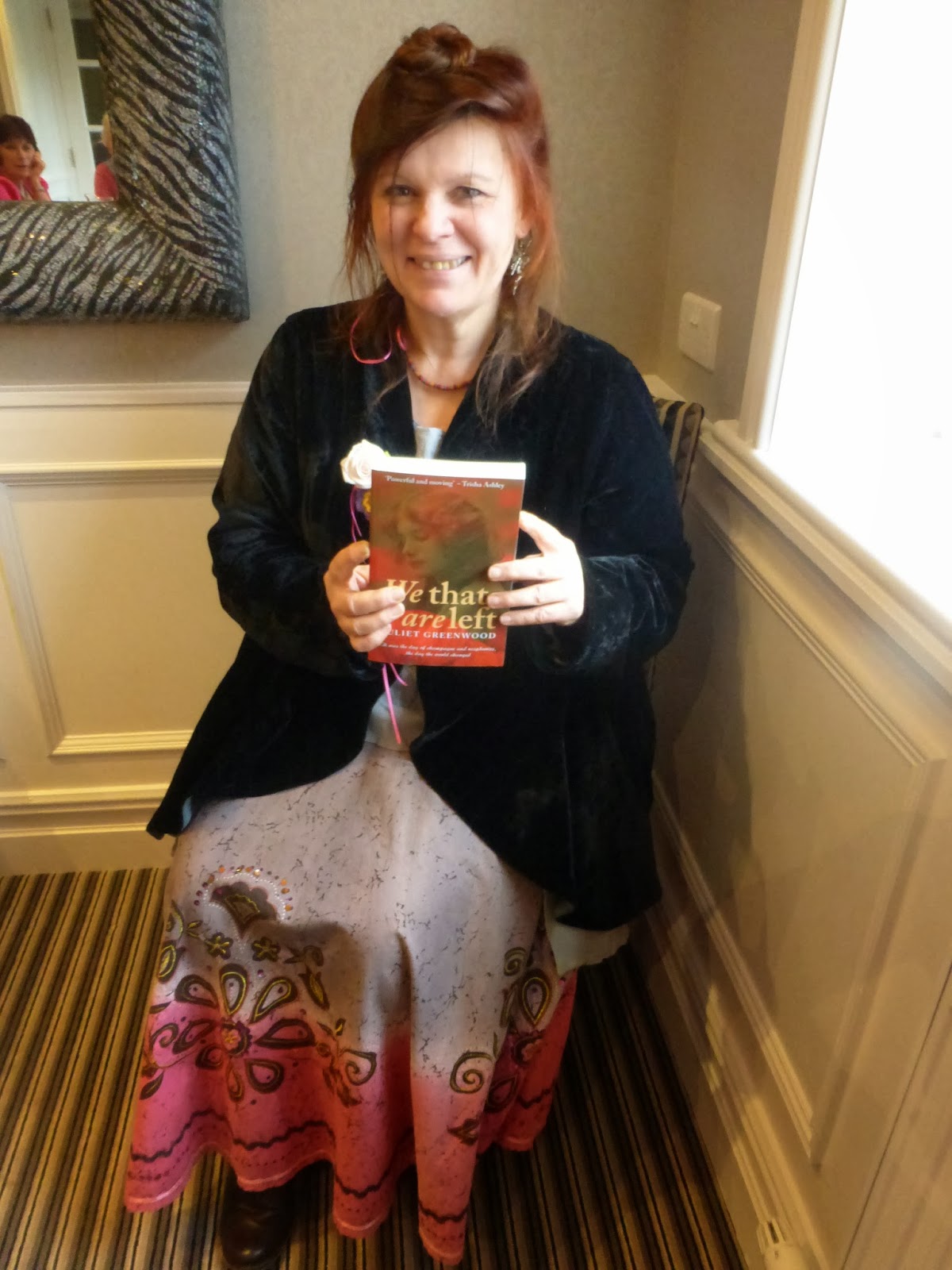
A WWI Bake Off by Juliet Greenwood

When I began researching the lives of women in Britain in World War One, the last thing I thought I would find myself doing was to be trying out some delicious (and some weird and wonderful) recipes.

Bara Brith
Unlike in World War Two, there was no official rationing until towards the end of the war, but much of Britain’s food was imported and so there were soon shortages, and many things became expensive. It wasn’t just food, but medicines, too. During the war, women, especially those in the countryside, returned to the old ways. They grew and preserved as much as they could, and foraged for things like blackberries and rosehips, which are an excellent source of vitamin C and wonderful home remedies for coughs and colds.

It might not sound heroic, but without food and medicine no one can survive. Food was sent out to the soldiers at the front, and helped the wounded recover. It fuelled the workers who kept the country functioning – all those forgotten millions without whom the war could not have been fought and lives rebuilt afterwards. 

Maids of Honour
Many of these women were taking over the running of the family business or, like my heroine, Elin, the family estate, for the first time. In 1914 most women were destined to be wives and mothers. Their role was to support their men and follow their lead. When women first tried to help the war effort by setting up an ambulance service they were laughed at and told not to bother their pretty little heads, but they were soon setting up field hospitals, driving ambulances and looking after the dead and the dying. It was the time when we proved we could drive trams and trains, and be doctors, surgeons, mechanics and businesswomen. And we established that we don’t faint in a crisis but are intelligent, brave and resourceful.

What I found fascinating is the way in which this reflects the changes in attitudes to food that have been happening in the UK in the 21st century due to the recession. Apart from the very poor, people before WW1 were used to huge meals packed full of cream, butter and meat and being able to get hold of anything they wanted. During the war they had to learn to exist on a much simpler diet – one that didn’t need a Downton Abbey style army of servants! Today, too, there is much more interest in growing your own and home baking and preserving rather than going out for meals or buying ready made.

Juliet's Kitchen
After the war, there was a new interest in cooking. This time it was from single women who worked in low paid jobs, or forged successful careers. What they wanted was to learn to cook cheaply and simply for themselves and their friends in their flats and bedsits after returning from a hard day’s work at the office, the hospital, the lab, the school, the university. With so many men lost, many women needed to find a new way of living, and of supporting themselves. And they were the pioneers who led the way to the choices we have today.


Juliet Greenwood
Over the past months I’ve been gathering recipes, some traditional and some from war time newspapers, which I’ve been trying out – and in some cases adjusting for modern tastes. Plus I’m vegetarian, something almost unheard of in 1914 (apart from cranks and socialists), so I’ve had to source vegetarian suet and rennet.

I’ve tried all the ones that appear in the book, and I now can’t wait to try the next on the list! Friends have been persuaded (okay, arms have been twisted) to try their own and send in photographs, or to come and taste the results. I’ve yet to find anyone brave enough to attempt rabbit pie. So any willing volunteers out there, just let me know. I have the recipe. But no rabbits.

Nettle and dandelion beer, anyone?

We That Are Left by Juliet GreenwoodEden's Garden by Juliet Greenwood


Blog:            http://julietgreenwoodauthor.wordpress.com/


Twitter:        https://twitter.com/julietgreenwood


Friday, 7 February 2014

Doing the Revisions by Annie Burrows


Usually Annie Burrows blogs here about the research that goes into creating her historical romances.

But this month she'd like to talk about another important, behind-the-scenes aspect of being a writer - Doing Revisions.

Well, you see, I've just finished the second round of revisions of the next book I hope to have published. 
I've had 17 books and novellas published, so you'd think by now I would know what I'm doing.  Sometimes, when royalties come through, it looks as though other people do, too!
But then I send in a fresh manuscript, my editor reads it, writes back to tell me what she thinks of it...and I go into meltdown.


Every suggestion she makes feels as though she's taken a knife and slashed at my precious creation.  I've been living and breathing my characters for months by this time, wept with them, laughed with them, (even throbbed with them when I've been writing the naughty scenes) and then, this woman who does not know my darlings as well as I do has the gall to find fault with them!

Or (sharply indrawn breath) is she right?  Is my writing rubbish? Should I just give up and go out and get a "proper" job, because clearly, I'm an impostor, and about to be found out.  (Cue alcoholic beverage)

Fortunately, I know a lot of other published authors, and almost without exception, they react just the same as I do when revisions come in.  And those who've been in the business longer than me have given me some very helpful advice.


First, after reading the revisions suggestions, they recommend just walking away from the computer, and not looking at them again for a whole day.  By that time, I've calmed down, and when I read the email again, the suggestions don't seem cruel and unreasonable, but practical ways to improve the book, and put my hero and heroine's case more strongly.

The next, and equally helpful piece of advice is to take the revisions letter, and break it down into bullet points.   And then look at one issue at a time.  (Because if there are several pages of these "helpful suggestions", the prospect of applying them all is really, really daunting)


It also helps me to print out the list of bullet points, and put them in order of importance.  And draw arrows linking them, if my editor is mentioning the same point, in various ways.  So that I can then lump them all under one heading, such as "make the hero appear stronger" or whatever.
As I go through this process, I generally come up with ideas for how to implement them.


Though of course another advantage of having a printed page is that I can scrawl "NOOOO" on it, in red pen, if I really, violently disagree with something the editor has suggested.  This gets the frustration out of my system nicely.  And I can then email my editor back, politely pointing out why I don't think that particular suggestion will help.
On my last round of revisions, for instance, I broke my editor's letter down into 23 distinct points.  I could see, straight away, how to implement 19 of them, and told her so.  Of the other 4 points she raised, I thought 3 would be impossible to implement, and the other one tricky.  However, I promised to have another think about them as I worked in the rest of the changes.


Result?  In the end, there was only one of her suggested changes that didn't get done.  

(I'm hoping that pointing out I did the other 22 will distract her enough so she doesn't notice!) 


Annie's latest book, Portrait of a Scandal, is out now.


Saturday, 4 January 2014

The Story Behind Safe Harbour by Beth Francis

Safe Harbour has just been published as a pocket novel by People's Friend. Author Beth Francis tells us how she was inspired to write the story.
 
With the rain lashing the windows, gale force winds and dire warnings of tide surges it’s hard to imagine the hot summer’s day when I sat on the sea wall watching a yacht edge towards her mooring. An idyllic picture. I imagined a woman at the helm and wrote the first page of a novel, before turning back to my current writing project.
 
A year or so later, slipping and sliding along the muddy paths of the forest at Pentraeth I pitched the idea to Erika, another of the Novelistas, who was demanding to know what I was writing next.
 
“What’s her name. Why is she unhappy? Why did she leave if she loved him? Why did she come back? Is she a wimp?”
 
The questions came thick and fast and I became defensive about Jess, who until that moment had simply been a cardboard cut-out on a boat. By the end of the walk I was eager to get back to my computer and tell her story.
 
We used to own a small boat but I was a cautious and slightly nervous sailor, never comfortable out of sight of land, always happiest recollecting the day’s sail once we had safely moored. I was also always slightly anxious that my sailing skills would not be good enough to bring the boat to land if my husband was suddenly taken ill. I had no idea, when starting to write, that Jess would face just that problem, but hope I would have managed as well as she did.
 
It was the setting that first inspired me, and as I wrote, I walked the coastal paths around Amlwch with my husband trying to see the familiar scenery through Jess’s eyes. With the story almost finished, I sent the first few chapters off to People’s Friend, intending to take a picnic to Llandwen Island on the next sunny day to make notes for the final chapter.
 
Life intervened and before the sun came my husband collapsed. He was recovering in hospital in Liverpool when an e-mail arrived from People’s Friend asking to see the rest of the story. It was impossible. My life was taken up with trains, hospital visits and confusion. But Erika had other ideas. A few days later we were walking on Llandwen Island, where I found the perfect spot for the end of the novel.
 
I wrote the last chapter on the Liverpool Metro and was on the last paragraph when a Canadian tourist asked me if I was a professor. When I said I was writing fiction she told me how her boyfriend had just proposed. It was so romantic! But that’s another story …


When Jess Tyler's brother, Oliver, phones from Johannesburg ...and persuades her to go sailing with him, he doesn't tell her he's trying to avoid certain individuals, nor that the yacht he has conveniently been loaned is moored off Anglesey. Having spent the intervening years trying to forget an idyllic summer there with local boy Matt Pritchard, Jess finds herself once more sailing along the coastline that she and Matt explored together.
 
Available now, at supermarkets and newsagents, price £2.99