Showing posts with label Harlequin Historical romance. Show all posts

Thursday, 1 June 2017

Ask Annie: Prologue - Or Not?


On the first Friday of each month, Novelista Annie Burrows will be drawing a question out of the jar where we've been putting all the questions about the writing process posed by readers –

This month, the question is:

Beginning/Prologues?
Where in the story to actually start the novel.


The glib answer would be to quote Lewis Carroll “Begin at the beginning…go on till you come to the end: then stop.”

But, what is the beginning?  A pivotal moment in the character’s past, which forms their character, or sends them on their quest?  The moment they are born?

Beginnings are very important.  The opening section of your story is the bit which will be available to a reader in the “browse the book” section if it is an ebook, or what a shopper in a real life shop will read to help them decide whether to buy your book.

Or not.

So it has to grab them, and make them want to find out what comes next.  You have got to make them interested in your main character, and what they are feeling, and what is happening to them.  Or they will put the book down, and buy someone else’s.

And with so many new titles becoming available every month, they have a lot of someone else’s to choose from.

So, I would say, start your story at a pivotal moment.  If you write romance (as I do) it is a good idea to start when your hero and heroine first get together, or reach some kind of turning point, so that the focus is on the developing romance right from the start.  And makes it clear to the reader that the romance is going to be front and centre all the way through.


To give you some examples, I have started some of my books with:
The moment my heroine has to jump out of the way of the hero’s curricle, which he is driving far too fast down a country lane so that she ends up in a muddy ditch. (His Cinderella Bride)

The moment when the hero first asks the heroine’s friend to dance, and, when she refuses, turns with resignation to the heroine, setting her heart a-flutter. (Captain Fawley's Innocent Bride)

The moment when the hero and heroine wake up in bed, naked, with no idea how they got there together. (In Bed With the Duke)


And the one I have just submitted to my editor opens at the point where my heroine socks my hero on the jaw.

However, when planning out a book, I don’t start imagining the story at such a dramatic point.  The story which I’m figuring out at the moment, for example, began when I imagined the heroine in a situation which rocked her world, overturned everything she’d assumed about her life, and sent her spiralling into depression. I can’t start writing it from that point.  Because it will be months before she meets the hero, and their romance starts.  And it is the story of that romance I will be telling – NOT HER LIFE STORY.

So, I am going to have to tell the reader about that crisis in her life, in little bits and pieces, as she relates it to the hero.  They will both explain why they react as they do, and behave the way they do, to each other, in conversation, as the pair get to know each other.  In other words, the reader will get to know both of them while they are getting to know each other.

It would be much, much easier to write this story in chronological order, starting with the heroine’s crisis, taking her through her depression and the beginning of her recovery, and then relate how the romance with the hero completes the process of healing completely.  But would anyone want to read it?  Would the reader have the patience to wade through all that depression, and gloom, in the hope that a dashing hero would come into my heroine’s life and help her see that life is worth living?

And more to the point, would my editor?

So, these are a few questions you could ask yourself when deciding where to start your story.
What will hook the reader?
What will give them the best idea of what kind of story it’s going to be?
And, if like me, you have a pivotal moment in the character’s life which the reader really needs to know about – what is the best way to relay that information?  In one big chunk (which is sometimes referred to disparagingly as an info-dump)
Or, in little snippets, which will entice the reader to keep on turning the pages?  (And is much, much harder to write!)

And there you have it.

If you’d like to Ask Annie anything about writing, then please contact her via the comments section on this blog, or if you’d like to remain anonymous, you can contact her via her website:
 putting Ask Annie in the subject heading.

And if she feels qualified to answer your question, you might see it become the next month’s blog post!


Annie's latest release is "The Debutante's Daring Proposal."

You can read the opening section here

You can purchase it from Amazon, Harlequin, Mills & Boon or any of your favourite etailers.


Thursday, 2 March 2017

Ask Annie: How to Write the Perfect Hero

You may recall that I've been taking questions from the Ideas Jar of late, and the most recent one I've received is this:

Following on from your post on point of view – how exactly do you approach characterisation between the genders?  i.e. male point of view and female.  How do you research the male psyche?

Well, I had to have a bit of a think about this question, because it immediately made me feel as if I ought to research the male psyche.

But after a bit, I decided to ‘fess up.  I don’t really hold to the prevalent view that men are from Mars and women are from Venus.  We are all from planet earth.  We all react to the trials and tribulations that life throws in our paths according to many factors apart from our gender.  Our personality, background, previous experience of similar situation, the state of our health, stress levels, or even whether we’re hungry or tired or just plain in a bad mood for some other reason.  And while I find articles like this one, that is supposed to highlight the difference between the way men and women think very amusing, I don’t believe it really does demonstrate basic differences between the sexes.

I don’t hold to the view that women, as a rule, would spend that much time dissecting their relationships – at least, not the kind of women I want to write about.

Nor would any hero of mine be so inattentive to the woman he is dating that he loses the thread of the conversation entirely.

When I write a hero, he will think, and behave, far better than that.  If he is going to be a swoon-worthy romantic hero, then he is going to have real goals, and a compelling motivation for thinking the way he does, for saying what he says, and for acting the way he does.  Because any heroine I write is most certainly not going to be feeble enough to fall for a man who is not worthy of her.

Having got that off my chest, I have to admit that when I write a story, I do tend to find it easier to imagine what my heroine is thinking and feeling, and often start by writing the romance almost entirely from her point of view.  And the hero I write for her has to be what she needs, specifically, rather than being a stereotypical hero in any way.

He also needs to have goals in which a modern reader can sympathise, and motivations that make sense.  He needs to be, first and foremost, a person.  A person that readers can relate to, and cheer for, and want to find a happy ever after.

Now that, actually, is where I do face having to make some tricky choices.  My hero needs to be the kind of man that will make a modern reader swoon, yet he also has to be a believable Regency male.  And because of the era in which he lived, he would have had a very different outlook in many ways, to a modern man.

Both he and his female counterpart would have known their place in the social hierarchy, which was much more rigid than ours today.  He might well have known what kind of life he would have lived, from his birth, particularly if he was born into the peerage.  He would have been closer to the land, more aware of the passing of the seasons, and familiar with handling animals.  He would have known how to ride horses and how to shoot pigeons, and would not have thought either pastime anything out of the ordinary.  He would have attended brutal bare-knuckle fights, and cock fights, but he would also have gone to church as a matter of course every Sunday, and been proud of being English (not British).  If he was from the upper classes he would have also had a working knowledge of Greek and Latin.  He would not have been ashamed of believing he was innately superior to women, (and most other men).  Nor would he have thought it unreasonable to pay a skilled man to spend his entire life taking care of his clothes, or spending a small fortune on getting a jacket that moulded to his shoulders, and breeches that outlined his fine, muscular legs.  He would also have consumed so much alcohol – since water wasn’t often fit to drink – that nowadays he might be deemed to have a bit of a problem!

And yet I still need to portray him as a person with whom modern day readers can empathise.

And so I draw a veil over the cock fights he attends, and don’t let the reader in on the fact that he probably consumes so much alcohol that he is slowly but surely pickling his liver.  Instead, I concentrate on his reaction to, and his treatment of, my heroine.

If ever he acts badly towards the heroine, the reader needs to see that his motives are not from sheer unpleasantness, but because he is damaged in some way by the blows life has dealt him.  And be able to believe that the heroine I write for him will be capable of bringing him healing, through the love he develops for her.  And that she bestows on him.


So, to sum up, when I write a hero, I want him to be believable as a character from his time period.

I want him to have the kind of character that a woman, from any time period, could find totally swoon-worthy.

And I also want him to be a perfect match for my heroine.

And it won’t hurt if he also looks like this!


Annie's next hero is Lord Ashenden, whose story will be told in "The Debutante's Daring Proposal" which is released in June, but is already available for pre-order through Amazon (and other retailers)


Thursday, 5 January 2017

New Year's Resolutions. Are they a good idea? By Annie Burrows

As the New Year bursts into life, I've been thinking about resolutions.  And challenges.

Last year I set myself two challenges - the first of which was a reading challenge.

I found it on Goodreads, in the Harlequin group, and it really intrigued me, as it was an A - Z one (and those of you who've been following my blogging endeavours know how much I like doing things in alphabetical order.)

The first reading challenge I signed up to was to find a female lead in a romance book for each letter of the alphabet.  And then, in a fit of enthusiasm, I signed up to a male lead, an author, and a title for each letter of the alphabet as well.


Through the course of doing this reading challenge, I learned two things.


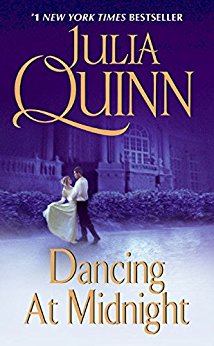
First, if you want to really stand out on the bookshelves as an author, choose a pen name beginning with Q, U, or Z.  Because you will be almost unique.  I couldn’t believe how hard it was to find a romance written by somebody with those initials.  In the end, I remembered that Julia Quinn writes Regency romances, and bought "Dancing at Midnight", but then was still stumped for a U and a Z.


Another person doing the reading challenge suggested some Z’s, and I plumped for “Gnome on the Range” by Cindy Zane, an author I’d never heard of before, but who can resist a title like that?  And it really did feature garden gnomes, too, so it was a win/win situation.  And was a fun read.


That left me with only an author starting with U to find.  I wondered if my local library would be able to help.  But even the librarian with her computer couldn’t find anything in the romance section by anyone beginning with U.  In the end, I picked a thriller with a romance thread (though it turned out to be a lesbian one which came as a bit of a shock!)

Anyway, with the help of other readers doing the same challenges, the librarian, and a website called eyeonromance.com which lists books alphabetically by themes, I managed to complete three out of the four challenges.

Which brings me to the second thing I learned.  Which is about myself.

Even though I completed three out of the four challenges, I didn’t manage to find and read a male lead beginning with a Q, a U, or a Y.


So although my score over the year was 101 out of 104 completed, instead of feeling proud I’d got 97.1 percent (verified by my handy mathematician) I feel as if I’ve failed.  Because I’m a perfectionist.  I set high targets for myself.

Which probably explains my almost constant state of feeling disappointed with myself, and what I’ve managed to achieve.  Instead I think of all the things I haven’t done.  Should have done.  And constantly beat myself up about them.

So maybe my challenge this year should be to focus on achievements rather than failures.

My other “resolution” was to get my weight under control.  Since I reached a certain age, my weight had started to climb no matter how little I ate, and I realised I was going to have to confront the dreaded “e” word – exercise.

A friend of mine recommended a local zumba gold session, (which is a polite way of describing a class designed for the more mature citizen).  She promised me that the music would not be too loud, and that nobody there would be under the age of 40, nor superfit, nor dressed head to toe in designer sports wear.  So I tried it.  And didn’t hate it.  And managed to keep going for the whole year (apart from the weeks I was out of town on holiday)

And I did get my weight under control, getting right back to my pre-certain-age weight.
Result!

And now it’s January again, the time to make new resolutions.  And do you know what?  I can’t face taking on another reading challenge which will make me feel like a failure for only getting 97.1 percent.

Nor, to be honest, can I face going back to zumba.  Even though it worked, it wasn’t an activity I got any pleasure from.

So – what do you think?  Should I take on any challenges this year?
Or should my resolution be to maybe just accept myself as I am?


Annie's latest release, "Once Upon a Regency Christmas" which features a heroine who also believes she is far from perfect, can be found at Amazon and other etailers.

Thursday, 30 June 2016

The Ideas Jar


On the first Friday of each month, Novelista Annie Burrows will be drawing a question out of the jar where we've been putting all the questions about the writing process posed by readers -


This month, the question that came out of the jar was:

How do you decide on how many secondary characters should appear in a book?
1) Planned out list?
2) As and when required?

That's a very good question Cheryl! (waves)

As you know, I write for Harlequin Mills & Boon, so the focus is very much on the two main characters, and their love story.

However, they do need a world in which to act out their story, and I do have to populate it with secondary characters.

When I first start thinking about any story, the first thing I do is imagine the backstory of my hero and heroine.  I have to know what kind of childhood they had, which means placing them in a family.  And at this stage I often do write out a list of "the sisters and the cousins and the aunts" (to paraphrase W. S. Gilbert.)  I may also give them a pet such as a dog, and since my books are set in Regency England, a horse (with its own personality.)

There may also be a villain, with henchmen, who will also go on the list.

But then I start writing.  And my characters, at this point, become much more rounded.  And the world in which I have them moving becomes far more detailed as well.  As the story develops, I do find I need "extras", as well as the initial cast I drew up.  A butler, to answer the door, a footman to carry a note, a maidservant to help my heroine dress and undress, and various lords and ladies to populate the ballrooms.

But then, sometimes, characters also just walk into the story without my say so because they decide they have a part to play.

For instance, when I was working on the Silk and Scandal series, I sent my heroine to the house of her estranged half brother, and when she knocked on the door, it was opened by an Indian manservant I never knew existed before.

Since another author was responsible for the part of the series that dealt with this half brother, I immediately e-mailed her, to tell her what had happened.  I think the email went something like - "Midge has just knocked on Stephano's door, and it has been opened by an Indian manservant.  Have you any idea where he came from?"

As this email went to another author, she was not at all phased by this, and immediately emailed back with a whole story of how Stephano had rescued this man whilst seeking out jewels in India, and how he was now a devoted servant who would protect his master with his life.

It was as if neither of us invented him.  He was just there, hovering in the wings, waiting to walk on and play his part.

So, in short, the answer to the two-part question is Yes!  Both!  I start off planning the characters I think I'm going to need, add others when I need them, and also get surprised by characters I didn't know were lurking in the background, who simply want to get in on the act.


So - do you have any questions about the writing process you would like to ask?

If so, please leave your question in the comments box.  All questions will go into the jar, and I will draw one out each month. 


Annie's latest release is "In Bed with the Duke" which you can buy from Harlequin in the US or Mills & Boon in the UK

Thursday, 31 March 2016

X is for...X rated (or not?) by Annie Burrows

On the first Friday of every month, Novelista Annie Burrows has been sharing a very personal view of what it is like to be a writer. And is dealing with themes in alphabetical order. This month, she's reached X...

Last month, I asked what I should write about when I got to x, and several people suggested x rated.

I don't think I actually write x rated stuff, to be honest. In my mind, an x rating means erotica. And although I do write some steamy scenes, my main focus is on what goes on inside the heroine's head and heart, not the hero's bedroom.

It's not that I shy away from writing love scenes. I write about people falling in love, and a big part of that process involves sexual attraction. If I didn't include that part of my heroine's journey to her happy ever after, I would feel as if I was leaving out a huge part of her story. But that is what it is - just a part of her story. Sometimes the fact that the hero and heroine make love is an essential part of the storyline, but sometimes it just isn't.

Because, during the regency period, when my stories are set, single people didn't have the sexual freedom we enjoy today. There was a stricter moral code in place, and harsher punishments for women who didn't stick to those rules. Men sometimes had to make amends by marrying the woman they'd slept with, but by and large, it was the women left with the babies, the women who bore the brunt of society's disapproval, and the children who were left with the tag of bastardy.

Of course, if you were wealthy, there were ways round the rules that bound everyone else. Royal bastards were often given titles and lands. Girls from wealthy families who fell pregnant before marriage might be sent away to remote estates for a while, the child given to a humble family who'd receive wages for bringing it up, and the girl subsequently married off to someone who would be prepared to accept compensation for his bride's lack of purity. She wouldn't perhaps pay such a high price for having sex outside marriage, but she would still have a "stain" on her reputation - if anyone were to find out.

However, this means that my heroes and heroines are going to have to think very carefully about sleeping with each other before marriage. Which in turn means I have to think very carefully about how far to let them go if they aren't married. I do aim for historical accuracy, you see, and often I just can't imagine a scenario in which an unmarried couple would leap into bed with each other.

Which means that many of my books end up being what I would describe as "courtship" books. The couple might feel very attracted to each other, they may do a lot of flirting, but they won't fully consummate their relationship until after they are married. Or at least on the verge of marriage. That isn't to say there are no scenes where the hero tries to go as far as he dares. Which makes the ultimate scene, where he can finally make the heroine completely his, all the more satisfying (I hope!)

However, occasionally, I do write what I call "honeymoon" books. And the way I manage to do this is by having my protagonists marry at the outset, thinking they are going into a convenient marriage, and then finding they can't keep their hands off each other. And, because they're married, they don't have to. In fact, they tend to solve a lot of their issues in the bedroom (just like in real life?)

This means that my books don't all have the same level of heat. My 2015 Christmas book, for example, (The Captain's Christmas Bride) started with a girl accidentally seducing a stranger and having to marry him. And him believing that the only thing they have going for them is sexual compatibility. (You can imagine how that goes!)

In contrast, in the novella which is going to be out for Christmas in 2016 my hero and heroine don't get up to anything more than heated glances and one scorching kiss. It just wouldn't have been plausible for people in their situation, you see.

OK - now, here's a teaser for you. Do you think you can guess the level of heat of the books I've written from the covers I've posted in this blog?

Since the first two covers are both of the same book, I would say it's not likely!

So - what do you think my next book, "In Bed with The Duke" will be, from looking at its cover? Courtship book, or honeymoon book?

For more clues - you can read the blurb here

And you can read the opening chapter here 


Thursday, 4 February 2016

V is for...Voice by Annie Burrows


On the first Friday of every month, Novelista Annie Burrows has been sharing a very personal view of what it is like to be a writer.  And is dealing with themes in alphabetical order.  This month, she's reached V...which she has decided should stand for Voice.

In some ways, this article continues from the one I posted last month, about your Unique Selling Point.  Because your voice is going to be a part of what makes you unique.

Publisher's websites are always saying they are looking for fresh new voices.  But what do they mean by "voice", I've often wondered?  And how am I going to get a fresh new one?

Well, having read a lot of articles about it recently, I've discovered that actually it's quite simple.  My "voice" is simply the thing that makes readers recognize me as the writer.  It is my personality coming through in my writing.

This explains something that happened when I had my first book published.  My husband was rather impressed, and agreed to read it.  Even though it was a historical romance, and had a cover with a picture of a couple in a clinch, he read it during his daily commute to work on the train. (Which earned him lots of brownie points.)

When I asked what he thought of it, he said, in amazement, that it sounded just like me.  Well, of course it sounded like me - I wrote it!  When I asked what he meant, exactly, he explained that the things the heroine said were just the sorts of things he could imagine me saying.
(Which was fine, until a couple of chapters later, he mentioned that he thought the heroine was "a stroppy cow".  Half the brownie points earned for reading my book at all promptly deducted.)

But there you have it.  Your voice is just your personality shining through in your writing.  Your attitudes, your take on life, your values.  And in my case, my tendency to stroppiness (apparently - though I think I'm very easy-going.)

Another thing which helped me understand what a writer's "voice" is, happened during a writer's workshop I held, in the days when I thought that because I'd had a book published, it qualified me to teach writing as well.  I set the students a very simple writing task - to describe their hero.  Every single person in that class came up with a wildly different article.  Not only their heroes were different, but so were the reasons for picking them, and the way they described them.  Each article told me as much about the person who'd written it, as the hero they'd picked.

Every single writer has their own distinct take on the world, because of the way they were brought up, their values, their interests, and so on.  If you were to ask six people in the room where you are now, to describe the room, you'd probably get six wildly different accounts.  Some of the writers would describe the room in detail, right down to the style of architrave round the door.  Others would focus on the other people in the room.  Even the ones who wrote about the other people would each come up with something different.  Some would be more interested in what the others were wearing, some on what they were doing.  Someone might even take the opportunity to have a dig at you for making them do all the work when they'd paid good money to learn how to write.

So, your "voice" is just you.  Your way of putting things.

However, when you first start writing, you will probably emulate writers you admire.  It can take time, and practice, to gain the confidence to just be yourself, to allow your own, unique voice to come through in your writing.

Unless of course you happen to be naturally stroppy and opinionated.

Annie's next book features a heroine who might be considered "stroppy".  Especially when she's confronted by an infuriatingly autocratic hero.

"In Bed With the Duke" is available for pre-order on Amazon and will be released in May 2016.

Thursday, 2 July 2015

P is for...Point of View by Annie Burrows


On the first Friday of every month, Novelista Annie Burrows has been sharing a very personal view of what it is like to be a writer.  And is dealing with themes in alphabetical order.  This month, she's reached P...


While I was trying to get my first book published, I read a very helpful "how to" book called "The 1st 5 pages", by Noah Lukeman, which contained a piece of writing advice that stunned me.  It suggested that before I even started my story, I ought to decide from whose viewpoint I was going to tell it, and whether to do so in 1st, 2nd, or 3rd person.

Er...what?

What is a viewpoint character, I wondered, and what is the difference between first, second or third person narration?


In a nutshell, in case you didn't know either, the viewpoint character is the person through whose eyes a reader will experience the story.  The person whose story it is.  If it is written in 1st person, it will be "I" did this that or the other.  I'm currently reading a fabulous thriller by Dick Francis, who always seems to tell his story in the first person, and comes up with some amazing opening lines because of it.  Because he uses the first person, you always feel as if you are experiencing the story alongside someone who has only just gone through it themselves, and is telling you all about it.


2nd person is "you" did it.  Apparently this is the hardest of all to write and is rarely used.  I can't think of a single example to give you - sorry!  3rd person is "she/he" did this that or the other, and is the most commonly used.


I knew that writing a story is a kind of world-building exercise.  I'd always thought of it as painting a picture with words.  But this chapter likened it to playing a piece of music, in which any inconsistency with the viewpoint would sound like a clashing, crashing discord, shattering the harmony.

So I read the single chapter dealing with viewpoint very carefully, and then looked at my own current manuscript, as recommended.  Firstly, I discovered that I had been writing from my heroine's viewpoint (mostly) in 3rd person all along.  Which, coincidentally, turned out to be what Mills & Boon recommended in their guidelinesat the time.  And since Mills & Boon was the publisher I was targeting, it was a jolly good job too.

I also learnt about the various ways I could make mistakes with handling viewpoint.  I could change from the viewpoint of one character to another with bewildering rapidity, I could tell sections of the story from the viewpoint of characters who really didn't matter, and shouldn't have come to the fore, or I could fumble it altogether by having a character say or think something she couldn't possibly have known.

I'd thought my writing was pretty good, before then, but after reading the chapter on viewpoint, that story suddenly seemed full of discordant notes.  I had indeed switched viewpoint so quickly any reader would have had trouble keeping up with who was the main player in a scene.  I had also written substantial chunks from the point of view of characters who shouldn't have been speaking directly to my reader.


Those errors wouldn't have been errors at all if I was writing the kind of story where it is fine to have several people giving their account of the story.  In crime novels, for example, one incident can be related by several witnesses.  I've also read family sagas
where the thread gets taken up by someone from the next generation.  So long as the change from one character's viewpoint to another is made clear and doesn't confuse the reader, that method can suit certain types of story.

However, since I'm writing romance, and I want to create an intense emotional experience for my reader, it is far better to get right inside my heroine's head, and stay there (unless I need to let people know what the hero is thinking).  When the reader knows what my heroine knows, understand what motivates her to act the way she does, it creates empathy.  Even if the heroine acts badly, the readers should know why she did what she did, and will therefore still keep rooting for her.  Same goes for the hero.


But if I introduce scenes from anyone else's point of view, and take the focus off the main characters, it dilutes the intense emotion I want my reader to feel.  There was no need for the woman my heroine (Amity) met in the dressmaker to suddenly start talking to the reader.  It was Amity's story, not Mrs Kirkham's.  Similarly, I shouldn't have written anything from Amity's brother's point of view, particularly since he was going to die in chapter 4.


Nor should I have had Amity knowing exactly what her brother was thinking, no matter how close they'd been as children, except by reading his body language and taking her best guess.

In fact the only viewpoint mistake I hadn't made was switching from first (which I'd never used) to second or third.

So, once I'd learned about the various types of viewpoint, I then began to think a bit harder about whose viewpoint to use in any scene.  To create the most impact for the reader, it's best to think about which character will have the most invested at the time.  Who has the most to lose or gain?  Since I write romance, I really only have the choice between the hero or the heroine, but it is a point that still needs careful consideration.  Do I focus on the heroine's determination to resist the hero, whose rakish reputation has already made her turn down his proposal of marriage more than once, in spite of the almost overwhelming attraction she feels for him?  Or do I get inside the hero's head, and let the reader know that this time, he has really fallen in love, and his devil-may-care smile hides his fear of rejection?
 

Once I'd got the hang of considering point of view, it made a huge difference to my writing.  Once I stopped digressing into the mind of the heroine's brother, his commanding officer, a woman Amity met in the dressmaker, or anyone else, the story focussed more closely on my heroine, and her journey of discovery, and therefore became more interesting.

Amity still hasn't found a publisher - but I'm working on it!


 Annie's latest book is "A Mistress for Major Bartlett", 2nd in the "Brides of Waterloo" series from Harlequin.  Currently available from Amazon

Thursday, 4 June 2015

O is for...Osmosis by Annie Burrows


On the first Friday of every month, Novelista Annie Burrows has been sharing a very personal view of what it is like to be a writer.  And is dealing with themes in alphabetical order.  This month, she's reached O...

I have to admit I was a bit stumped for an "O".  I have to thank fellow Novelista Johanna Grassick for coming up with the fabulous word "osmosis".

The dictionary definition is: "Tendency of solvent to diffuse through porous partition into more concentrated solution."
Or, "The process of gradual or unconscious assimilation of ideas, knowledge, etc."
In other words, "soaking stuff up".

I have to admit, when I first started writing, I did a lot of "soaking stuff up."  I'd studied literature at university, but not creative writing.  So that although I could write essays about style, metaphor, and subtext, I didn't have a clue about how to achieve any of those things in a work of fiction I'd written myself.

I've already mentioned in an earlier blog (M is for...Mills & Boon) about how I discovered that any writer who wants to submit to a publisher of genre fiction had better read a lot of them to get a "feel" for what they are looking for.  In other words, I needed to soak up the atmosphere of romance that Mills & Boon publish.  I've read, since then, all sorts of books which go into clinical detail about how to become a better writer, specifically of romance, but I still think the best way to get a real feel for the genre is to read lots and lots in the same line, and soak up the atmosphere.

I have shelves full of Georgette Heyer, and other Regency romances, so it's not surprising that the stories I've had published are also light-hearted Regency romances.


I'm not trying to write like Georgette Heyer, though.  I'm trying to be as original as I can be.  Which brings me to the slight drawback to learning to write by a process of osmosis.  And that is the danger that I might unconsciously soak up someone else's style.  That is why I steer clear of reading any kind of Regency romance at certain stages of writing my own books. I don't want to accidentally reproduce someone else's turns of phrase.


It isn't just the art of writing that I needed to "soak up", though.  In order to make a historical background convincing, I have needed to positively wallow in research books.  The only way I can confidently mention a mode of travel, a political undercurrent, or the cut of a gown is by reading as much as I can about the period.  The only way to get into the mindset of my characters, and make them come to life, is to understand the way people in that era would have thought and acted, which means reading biographies of eminent figures of the day.  And period newspapers.  Soaking up as much knowledge as I can makes it possible to bring the era to life on the page for my readers.  (hopefully!)

Going to museums and stately homes is also another way of soaking up atmosphere.  I can imagine myself as an aristocrat, strolling through the grounds in a full-length dress, or going for a ride in a carriage.  The view from a window, or the pattern of wear on a carpet can spark ideas, so that I often come home from trips to a stately home with inspiration for a new story.

A lot of writers will say that their mind is like a kind of compost heap.  All sorts of things go in, get absorbed, transformed, and produce a rich crop.
That's me.  A veritable compost heap!


Annie's latest release is "A Mistress for Major Bartlett" the second in the "Brides of Waterloo" trilogy from Harlequin Mills & Boon.

 Available from Amazon