Showing posts with label writing romance. Show all posts

Friday, 26 April 2019

The Publishing Process: Part 1: Edits by Sophie Claire

Last month I blogged about the publishing deal I’ve just signed with Hodder & Stoughton (you can read that post here), and the Novelistas have asked me to write about the publishing process. Although I had a book published before with a small independent press and a couple of short stories in anthologies, this is my first experience of working with a large traditional publisher. A lot of the process is new to me, and I’m very excited about getting input from professionals: I'm certain that my book, The Christmas Holiday, will be all the better for it. As I take you through my journey, I hope to demystify the process and show how much work goes into polishing a book before it’s ready to hit the shelves.

First up: Edits


I had heard terrifying stories about writers who were asked to completely overhaul their plots or rewrite a character, and often in less than a month, so I nervously awaited my editor's email. However, when it arrived I was relieved because there was nothing major and no structural changes. (I’m lucky that I wrote The Christmas Holiday in my own time without any deadline pressures, and my agent Megan had also been through it and suggested minor changes to improve it).

I was asked to add a couple of new scenes, but mostly, my edits were about deleting repetition and adding depth; that is, revealing little snippets of additional backstory which help explain characters’ behaviour. I was careful not to fall into the trap of adding too much: I’ve learned over the years that a couple of lines or a paragraph are usually enough.

What I didn’t expect in my edits were little comments marking the bits my editor especially liked – a passage that was particularly tense or an emotional scene she found moving. I was grateful for these, because it’s good to know what you’re doing right. So I made the edits, read through the book again, making sure it made sense (any writer knows, the smallest change can have a knock-on effect: no one wants their characters referring to an event that’s been deleted, for example) and sent the book back.

Then I waited to hear.

I had told myself I’d get straight back to writing book 5 (this one does have a deadline), but it was surprisingly difficult to concentrate until I’d heard if my edits were approved. I forced myself to sit at my desk each day, but my mind was elsewhere, worrying. Was what I’d done good enough? Should I have added more? Would my editor send me a second round of revisions? And if so, how many rounds should I expect?


After two days I couldn’t bear the waiting (I know, I really need to learn patience!) so I emailed the Novelistas asking how long does it normally take – days or weeks? ‘How long is a piece of string?’, said Trisha Ashley. Everyone agreed: it depends on the book’s schedule, your editor and their workload at the time. I knew I had to be patient.

Later that same day my editor got back to me (see? I should have been patient!) saying she was delighted with my revisions, and there were just a few tweaks left. I did these the same morning, and sent them off. The next stage would be copy-edits, which I’ll talk about next month, but for now I could get back to writing book 5.

Sophie.x

Thursday, 1 June 2017

Ask Annie: Prologue - Or Not?


On the first Friday of each month, Novelista Annie Burrows will be drawing a question out of the jar where we've been putting all the questions about the writing process posed by readers –

This month, the question is:

Beginning/Prologues?
Where in the story to actually start the novel.


The glib answer would be to quote Lewis Carroll “Begin at the beginning…go on till you come to the end: then stop.”

But, what is the beginning?  A pivotal moment in the character’s past, which forms their character, or sends them on their quest?  The moment they are born?

Beginnings are very important.  The opening section of your story is the bit which will be available to a reader in the “browse the book” section if it is an ebook, or what a shopper in a real life shop will read to help them decide whether to buy your book.

Or not.

So it has to grab them, and make them want to find out what comes next.  You have got to make them interested in your main character, and what they are feeling, and what is happening to them.  Or they will put the book down, and buy someone else’s.

And with so many new titles becoming available every month, they have a lot of someone else’s to choose from.

So, I would say, start your story at a pivotal moment.  If you write romance (as I do) it is a good idea to start when your hero and heroine first get together, or reach some kind of turning point, so that the focus is on the developing romance right from the start.  And makes it clear to the reader that the romance is going to be front and centre all the way through.


To give you some examples, I have started some of my books with:
The moment my heroine has to jump out of the way of the hero’s curricle, which he is driving far too fast down a country lane so that she ends up in a muddy ditch. (His Cinderella Bride)

The moment when the hero first asks the heroine’s friend to dance, and, when she refuses, turns with resignation to the heroine, setting her heart a-flutter. (Captain Fawley's Innocent Bride)

The moment when the hero and heroine wake up in bed, naked, with no idea how they got there together. (In Bed With the Duke)


And the one I have just submitted to my editor opens at the point where my heroine socks my hero on the jaw.

However, when planning out a book, I don’t start imagining the story at such a dramatic point.  The story which I’m figuring out at the moment, for example, began when I imagined the heroine in a situation which rocked her world, overturned everything she’d assumed about her life, and sent her spiralling into depression. I can’t start writing it from that point.  Because it will be months before she meets the hero, and their romance starts.  And it is the story of that romance I will be telling – NOT HER LIFE STORY.

So, I am going to have to tell the reader about that crisis in her life, in little bits and pieces, as she relates it to the hero.  They will both explain why they react as they do, and behave the way they do, to each other, in conversation, as the pair get to know each other.  In other words, the reader will get to know both of them while they are getting to know each other.

It would be much, much easier to write this story in chronological order, starting with the heroine’s crisis, taking her through her depression and the beginning of her recovery, and then relate how the romance with the hero completes the process of healing completely.  But would anyone want to read it?  Would the reader have the patience to wade through all that depression, and gloom, in the hope that a dashing hero would come into my heroine’s life and help her see that life is worth living?

And more to the point, would my editor?

So, these are a few questions you could ask yourself when deciding where to start your story.
What will hook the reader?
What will give them the best idea of what kind of story it’s going to be?
And, if like me, you have a pivotal moment in the character’s life which the reader really needs to know about – what is the best way to relay that information?  In one big chunk (which is sometimes referred to disparagingly as an info-dump)
Or, in little snippets, which will entice the reader to keep on turning the pages?  (And is much, much harder to write!)

And there you have it.

If you’d like to Ask Annie anything about writing, then please contact her via the comments section on this blog, or if you’d like to remain anonymous, you can contact her via her website:
 putting Ask Annie in the subject heading.

And if she feels qualified to answer your question, you might see it become the next month’s blog post!


Annie's latest release is "The Debutante's Daring Proposal."

You can read the opening section here

You can purchase it from Amazon, Harlequin, Mills & Boon or any of your favourite etailers.


Thursday, 5 January 2017

New Year's Resolutions. Are they a good idea? By Annie Burrows

As the New Year bursts into life, I've been thinking about resolutions.  And challenges.

Last year I set myself two challenges - the first of which was a reading challenge.

I found it on Goodreads, in the Harlequin group, and it really intrigued me, as it was an A - Z one (and those of you who've been following my blogging endeavours know how much I like doing things in alphabetical order.)

The first reading challenge I signed up to was to find a female lead in a romance book for each letter of the alphabet.  And then, in a fit of enthusiasm, I signed up to a male lead, an author, and a title for each letter of the alphabet as well.


Through the course of doing this reading challenge, I learned two things.


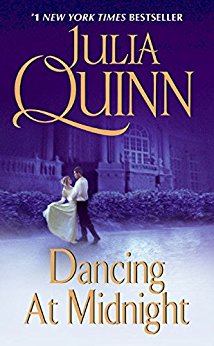
First, if you want to really stand out on the bookshelves as an author, choose a pen name beginning with Q, U, or Z.  Because you will be almost unique.  I couldn’t believe how hard it was to find a romance written by somebody with those initials.  In the end, I remembered that Julia Quinn writes Regency romances, and bought "Dancing at Midnight", but then was still stumped for a U and a Z.


Another person doing the reading challenge suggested some Z’s, and I plumped for “Gnome on the Range” by Cindy Zane, an author I’d never heard of before, but who can resist a title like that?  And it really did feature garden gnomes, too, so it was a win/win situation.  And was a fun read.


That left me with only an author starting with U to find.  I wondered if my local library would be able to help.  But even the librarian with her computer couldn’t find anything in the romance section by anyone beginning with U.  In the end, I picked a thriller with a romance thread (though it turned out to be a lesbian one which came as a bit of a shock!)

Anyway, with the help of other readers doing the same challenges, the librarian, and a website called eyeonromance.com which lists books alphabetically by themes, I managed to complete three out of the four challenges.

Which brings me to the second thing I learned.  Which is about myself.

Even though I completed three out of the four challenges, I didn’t manage to find and read a male lead beginning with a Q, a U, or a Y.


So although my score over the year was 101 out of 104 completed, instead of feeling proud I’d got 97.1 percent (verified by my handy mathematician) I feel as if I’ve failed.  Because I’m a perfectionist.  I set high targets for myself.

Which probably explains my almost constant state of feeling disappointed with myself, and what I’ve managed to achieve.  Instead I think of all the things I haven’t done.  Should have done.  And constantly beat myself up about them.

So maybe my challenge this year should be to focus on achievements rather than failures.

My other “resolution” was to get my weight under control.  Since I reached a certain age, my weight had started to climb no matter how little I ate, and I realised I was going to have to confront the dreaded “e” word – exercise.

A friend of mine recommended a local zumba gold session, (which is a polite way of describing a class designed for the more mature citizen).  She promised me that the music would not be too loud, and that nobody there would be under the age of 40, nor superfit, nor dressed head to toe in designer sports wear.  So I tried it.  And didn’t hate it.  And managed to keep going for the whole year (apart from the weeks I was out of town on holiday)

And I did get my weight under control, getting right back to my pre-certain-age weight.
Result!

And now it’s January again, the time to make new resolutions.  And do you know what?  I can’t face taking on another reading challenge which will make me feel like a failure for only getting 97.1 percent.

Nor, to be honest, can I face going back to zumba.  Even though it worked, it wasn’t an activity I got any pleasure from.

So – what do you think?  Should I take on any challenges this year?
Or should my resolution be to maybe just accept myself as I am?


Annie's latest release, "Once Upon a Regency Christmas" which features a heroine who also believes she is far from perfect, can be found at Amazon and other etailers.

Sunday, 31 July 2016

Dealing with the work/life balance, by Annie Burrows


On the first Friday of each month, Novelista Annie Burrows will be drawing a question out of the jar where we've been putting all the questions about the writing process posed by readers -


This month, the question was:

"How do you manage the work/life balance?"

Well, it's funny you should ask, Cheryl.  Because right now I'd like to know the answer to that myself.  The deadline for my 23rd book for Harlequin fell at the end of July, and my daughter is getting married in August.  The boiler developed a leak and blew the fuses downstairs which meant my freezer went off, my dyson started making a noise which sounded as though it had sucked up an angry chicken (well, I suppose any chicken would be angry if it had been sucked up a vacuum cleaner) and then on Monday the plug socket in my study went off "Spang" (which is the word I've coined to describe the combined flash of the spark and noise of the short) when I tried to turn on my computer.  The wedding planner called to say the groom's passport was in a different name to the birth certificate, which meant the marriage in Greece wasn't going to be legal, and the bridal shop sent the wrong wedding dress.

And that was just the last two weeks.

The only way to keep my sanity when a deadline is approaching is to drop some of the plates I have spinning.  I cannot deal with everything.  This time, the consumption of alcohol has been steadily increasing the closer the deadline/wedding approaches and my ulcer is starting to keep me awake at night.

So I've had to prioritise.  Decide what is really important, and put that at the top of my to-do list.  And yes, I do write to-do lists.  I get tremendous satisfaction from ticking things off it.  It makes me feel as if I'm getting somewhere, even if I'm adding things to do to the bottom of the list as fast as I'm ticking them off at the top.

Firstly, I have let the garden turn to jungle, although I bet not many people have 4ft tall thistles.

I have also delegated the vacuuming to my husband.  The first week he moved all the furniture in the bedroom, did the stairs with the crevice tool, and forgot the door mats altogether.  The second week, he looked at me with a hangdog expression, and asked if he really needed to move the furniture.  I confessed I only ever vacuum under the chairs once a year.  He cheered up considerably at the prospect of only flicking round the middle of the floors.  He also found it easier to do the stairs with the correct tool, and now has all the downstairs mats on his rota.  In fact, since he's discovered the power of the newly serviced dyson, (it was a worn bearing on the brush bar, not a stray chicken making the noise in case you're interested) he has also started vacuuming the kitchen and bathrooms (instead of me going round with the broom).  I'm saying nothing.  The floors are getting done, which is one chore off my list.

If you follow me on facebook or twitter, you will have noticed that I've gone quiet lately.  This last week I have only scrolled through my emails to attend to the urgent things that crop up.  I will just have to hope that my readers won't forget who I am if I don't constantly bombard them with little reminders of my existence on social media.  I haven't even looked at the Bookbub bargains for about a week.  Well, my kindle is chock-a-block with dozens of bargains already.  152 to be precise.  So do I really need any more books?

I managed to deliver my book in late afternoon of the deadline day, which was my work priority.  I have made sure my daughter has the correct dress, the groom a legal passport, and husband and I have full stomachs and clean clothes to wear.  Although, I have discovered that if I'm careful about how I peg the washing out, it doesn't need ironing.  I mean, who notices peg marks underneath the armpits?

In short, I have stopped trying to do everything myself.  And the things that aren't absolutely essential are being skimped.

An author friend of mine, the late Cathering King once said to me "A woman's work is never done.  Which is why I never do any."

I think that is very good advice.

Well, that's how I cope with the work.  As to the life part of the question?

Ummm....

Next question!


Thursday, 30 June 2016

The Ideas Jar


On the first Friday of each month, Novelista Annie Burrows will be drawing a question out of the jar where we've been putting all the questions about the writing process posed by readers -


This month, the question that came out of the jar was:

How do you decide on how many secondary characters should appear in a book?
1) Planned out list?
2) As and when required?

That's a very good question Cheryl! (waves)

As you know, I write for Harlequin Mills & Boon, so the focus is very much on the two main characters, and their love story.

However, they do need a world in which to act out their story, and I do have to populate it with secondary characters.

When I first start thinking about any story, the first thing I do is imagine the backstory of my hero and heroine.  I have to know what kind of childhood they had, which means placing them in a family.  And at this stage I often do write out a list of "the sisters and the cousins and the aunts" (to paraphrase W. S. Gilbert.)  I may also give them a pet such as a dog, and since my books are set in Regency England, a horse (with its own personality.)

There may also be a villain, with henchmen, who will also go on the list.

But then I start writing.  And my characters, at this point, become much more rounded.  And the world in which I have them moving becomes far more detailed as well.  As the story develops, I do find I need "extras", as well as the initial cast I drew up.  A butler, to answer the door, a footman to carry a note, a maidservant to help my heroine dress and undress, and various lords and ladies to populate the ballrooms.

But then, sometimes, characters also just walk into the story without my say so because they decide they have a part to play.

For instance, when I was working on the Silk and Scandal series, I sent my heroine to the house of her estranged half brother, and when she knocked on the door, it was opened by an Indian manservant I never knew existed before.

Since another author was responsible for the part of the series that dealt with this half brother, I immediately e-mailed her, to tell her what had happened.  I think the email went something like - "Midge has just knocked on Stephano's door, and it has been opened by an Indian manservant.  Have you any idea where he came from?"

As this email went to another author, she was not at all phased by this, and immediately emailed back with a whole story of how Stephano had rescued this man whilst seeking out jewels in India, and how he was now a devoted servant who would protect his master with his life.

It was as if neither of us invented him.  He was just there, hovering in the wings, waiting to walk on and play his part.

So, in short, the answer to the two-part question is Yes!  Both!  I start off planning the characters I think I'm going to need, add others when I need them, and also get surprised by characters I didn't know were lurking in the background, who simply want to get in on the act.


So - do you have any questions about the writing process you would like to ask?

If so, please leave your question in the comments box.  All questions will go into the jar, and I will draw one out each month. 


Annie's latest release is "In Bed with the Duke" which you can buy from Harlequin in the US or Mills & Boon in the UK

Thursday, 2 June 2016

Z is for Zombie Kittens - by Annie Burrows


On the first Friday of every month, Novelista Annie Burrows has been sharing a very personal view of what it is like to be a writer.  And is dealing with themes in alphabetical order.  This month, she's reached Z...and assures us it stands for zombie kittens!

If you've been following my a - z then you'll recall that last month I had to resort to looking in the dictionary to find a word beginning with "y" that I could use to talk about the writer's life.  At that point, I thought I'd have as much difficulty finding a "z" word.

But then I had the nightmare about zombie kittens.


The zombie kittens got my son, my daughter, and my husband.  I was left alone in a clearing, swirling a medieval mace round my head to stave them off, and began to yell - because although normal kittens are cute and fluffy, zombie kittens have glowing red eyes, and lots of sharp pointy teeth, not to mention the fact they can climb trees and then dive off branches onto your head.  I yelled so loud as a particularly terrifying tortoiseshell launched itself at my face, its lethal claws flexed, that I woke myself up.  I also woke up my long-suffering husband.

Next morning, when he asked what my nightmare had been about, and I told him, he couldn't stop laughing.  He can never remember what he's dreamed about, let alone have a dream so vivid and terrifying it wakes him up shouting.

And that brings me round to the point.  Even my nightmares aren't your average run-of-the mill ones that everyone has about finding you've gone to the shops with no clothes on, or all your teeth are falling out.  (You do all have nightmares like that, right?)  Because I have a rather overactive imagination.  Which never switches off, not even when I'm asleep.

And that's what makes me a writer of fiction.  When people ask me where I get all my ideas for stories from, I have never known what to tell them.  Because ideas just come.  And they come from the same place that those zombie kittens came from.  The fervid depths of my imagination.


It isn't something I have studied to acquire.  It's just the way I'm made.  It started in childhood.  On the way home from school, I'd chatter away to my imaginary friends.  In the playground, I'd gallop round in an imaginary episode of The Virginian, (in which I starred) or hide from Daleks (saving the world in the process).  People who have imaginations like mine look at the person sitting opposite them on a train, and instead of asking them what they do for a living, imagine a conversation in which they offer to murder someone you hate in exchange for murdering someone they hate.   Or describe entire worlds that can be reached through a wardrobe in a spare room, or create a language spoken by a race of immortal beings who live in an enchanted forest.

We can't help it.  We don't have to strive for plots, or characters, or scenes.  They are continuously dancing about in our heads.  And if we don't write them down, or act them out, then they keep on dancing, and shouting, and nagging, until we tell their story to somebody, in some way.

Even the zombie kittens.


kitten pics courtesy of pixabay


Annie's latest release is "In Bed With the Duke" which has been an Amazon UK bestseller, and reached the top 100 in the Regency charts of Amazon.com.  You can still buy it, and discover what sort of stories she dreams up, when she isn't dreaming about zombie kittens.
 

Thursday, 31 March 2016

X is for...X rated (or not?) by Annie Burrows

On the first Friday of every month, Novelista Annie Burrows has been sharing a very personal view of what it is like to be a writer. And is dealing with themes in alphabetical order. This month, she's reached X...

Last month, I asked what I should write about when I got to x, and several people suggested x rated.

I don't think I actually write x rated stuff, to be honest. In my mind, an x rating means erotica. And although I do write some steamy scenes, my main focus is on what goes on inside the heroine's head and heart, not the hero's bedroom.

It's not that I shy away from writing love scenes. I write about people falling in love, and a big part of that process involves sexual attraction. If I didn't include that part of my heroine's journey to her happy ever after, I would feel as if I was leaving out a huge part of her story. But that is what it is - just a part of her story. Sometimes the fact that the hero and heroine make love is an essential part of the storyline, but sometimes it just isn't.

Because, during the regency period, when my stories are set, single people didn't have the sexual freedom we enjoy today. There was a stricter moral code in place, and harsher punishments for women who didn't stick to those rules. Men sometimes had to make amends by marrying the woman they'd slept with, but by and large, it was the women left with the babies, the women who bore the brunt of society's disapproval, and the children who were left with the tag of bastardy.

Of course, if you were wealthy, there were ways round the rules that bound everyone else. Royal bastards were often given titles and lands. Girls from wealthy families who fell pregnant before marriage might be sent away to remote estates for a while, the child given to a humble family who'd receive wages for bringing it up, and the girl subsequently married off to someone who would be prepared to accept compensation for his bride's lack of purity. She wouldn't perhaps pay such a high price for having sex outside marriage, but she would still have a "stain" on her reputation - if anyone were to find out.

However, this means that my heroes and heroines are going to have to think very carefully about sleeping with each other before marriage. Which in turn means I have to think very carefully about how far to let them go if they aren't married. I do aim for historical accuracy, you see, and often I just can't imagine a scenario in which an unmarried couple would leap into bed with each other.

Which means that many of my books end up being what I would describe as "courtship" books. The couple might feel very attracted to each other, they may do a lot of flirting, but they won't fully consummate their relationship until after they are married. Or at least on the verge of marriage. That isn't to say there are no scenes where the hero tries to go as far as he dares. Which makes the ultimate scene, where he can finally make the heroine completely his, all the more satisfying (I hope!)

However, occasionally, I do write what I call "honeymoon" books. And the way I manage to do this is by having my protagonists marry at the outset, thinking they are going into a convenient marriage, and then finding they can't keep their hands off each other. And, because they're married, they don't have to. In fact, they tend to solve a lot of their issues in the bedroom (just like in real life?)

This means that my books don't all have the same level of heat. My 2015 Christmas book, for example, (The Captain's Christmas Bride) started with a girl accidentally seducing a stranger and having to marry him. And him believing that the only thing they have going for them is sexual compatibility. (You can imagine how that goes!)

In contrast, in the novella which is going to be out for Christmas in 2016 my hero and heroine don't get up to anything more than heated glances and one scorching kiss. It just wouldn't have been plausible for people in their situation, you see.

OK - now, here's a teaser for you. Do you think you can guess the level of heat of the books I've written from the covers I've posted in this blog?

Since the first two covers are both of the same book, I would say it's not likely!

So - what do you think my next book, "In Bed with The Duke" will be, from looking at its cover? Courtship book, or honeymoon book?

For more clues - you can read the blurb here

And you can read the opening chapter here 


Thursday, 31 December 2015

U is for...Unique Selling Point by Annie Burrows


On the first Friday of every month, Novelista Annie Burrows has been sharing a very personal view of what it is like to be a writer.  And is dealing with themes in alphabetical order.  This month, in spite of being hampered by Christmas and New Year festivities, she's reached U...which she has decided should stand for Unique.


When I started out as a writer I didn't want to have to do any marketing of myself.  In fact, that was one of the reasons I wanted to write for Harlequin Mills & Boon.  I thought I would just be sort of absorbed under the umbrella and become part of their brand.  I thought I could just concentrate on writing my stories, and my publisher would do it all the publicity for me.  And to a large extent, they do.

But I write in what is a very crowded market.  There seem to be dozens and dozens of other writers producing the same sort of book I do - Regency Romance.  And with the rise of self-publishing, the marketplace has become even more competitive.  Why should anyone want to pick up my book and read it, when there are so many others on offer?  What is going to keep a reader remembering my books, and coming back for more?

According to marketing gurus, what I need to do is offer a Unique Selling Point.  Something that will make me stand out from the crowd.

Fortunately for me, Mills & Boon have been brilliant about helping me develop my "brand".  When I first started writing for them, they had a reader panel, made up of fans of specific lines, who would send in a questionnaire about what they liked (or didn't) about each month's books, in return for being entered into a draw for free books.  This was a great piece of market research which I couldn't possibly have undertaken myself.  And eventually my editor contacted me with the news that what readers liked about my books was the humour.  One or two people had already told me that they had giggled when reading certain sections of my stories, so when she asked me if I would mind concentrating on that, rather than on what she termed "my dark side" (which made me feel as if I was perilously close to joining forces with Darth Vader) I agreed.

Because every writer needs to fulfil reader expectation.  If you pick up a Dick Francis, you expect the hero to be an unassuming chap who thwarts the bad guys within a setting which is something to do with horses.  If you read a Dean Koontz, you expect there to be something a bit spooky going on in the background of the thriller.  Even I could see, that within the Harlequin Historical line, some writers tended to create "bad girls", those of the demi-monde, who maybe turn to crime to survive.  Others are known for getting in a lot of historical detail.  Others write extremely tortured heroes, or go for unusual settings. 


I'd already had an Amazon review from a reader who was disappointed that the heroine of the book she'd just read by me hadn't been a virgin.  And when I looked back at previous books, I saw that this was something else I'd done without really thinking about it.  I'd made my heroines virgins, (at least, to start with!) and my readers had come to expect that from me.

So, thanks to the market research done by my publisher, and a disgruntled Amazon reviewer, I'd discovered what readers wanted from my writing, and I started going all out to provide it. It wasn't any hardship...just a slight adjustment to the way I went about thinking up my plots.  I can never resist deflating a pompous character, or inviting someone to share in a joke with me, and I'd already been doing that in my stories without really noticing I was doing it. 

But then my publishers did a series of webinars on marketing and branding.  By this time even I could see it wasn't enough to simply write the best story I could.  We've all moved into an era where we have to have an online presence.  Which, they said, should be consistent across all platforms.  Which meant thinking up a tagline which expressed what we stood for.

Ulp!  As if it wasn't enough learning how to write, and write to a deadline and a wordcount, now I had to promote myself too?

Fortunately, I'd recently had a revisions letter from an editor, saying that my current manuscript (at that point) lacked the "trademark Annie Burrows sparkle".

Aha!  That was it - that was what I wanted to offer readers, and what readers seemed to want from me - some sparkle.   So my tagline became "Sparkling Regency Romance".  Now a reader has a clue what they are going to find within the covers of one of my books.  Though I do aim for total historical accuracy, which demands a lot of research and double-checking, not a great deal of that actually makes it to the pages.  In the end, what I offer my readers is a light-hearted, fun sort of read.

 
That is my Unique Selling Point - the sparkle.

What is yours?


Annie's latest Sparkling Regency Romance is "The Captain's Christmas Bride", still available from Amazon, Mills & Boon and Harlequin, and other book stores.

Thursday, 3 December 2015

T is for Time Management by Annie Burrows


On the first Friday of every month, Novelista Annie Burrows has been sharing a very personal view of what it is like to be a writer.  And is dealing with themes in alphabetical order.  This month, she's reached T...so she'll be talking about how she manages her time.

I'm supposed to write two books a year, at 75,000 words each.  Every time I get a new deadline, one of the first things I do is to sit down and work out a timetable which will ensure I get my story in on time.

My last one went something like this:

Due August 31st.
75,000 at 10k per week (or 2 chapters per week) for 1st draft.  = 2k per day.  Will take 7 and a half weeks.
If start 4th March, should be done by April 30th.

2nd draft - revise 3 chapters per week = 8 weeks (assuming 15 chapters)
should take until June 17th

That should have given me a full two and a half months to do a third draft, which is when I usually have only a few little tweaks to iron out.  I was hoping I would be able to get the commissioned story finished, and then spend some time on a book I'd like to self-publish.

But what happened?  Well, to start with, my first draft was over 30,000 words short.  I'd written all the story I could think of, and the only way I could have put in anything else would have been shameless padding.

Fortunately, the Novelistas helped me with some brainstorming, during which we came up with a new ending.  So that my second draft, with a completely new ending, which I managed to finish on June 29th, came in at 64,000 words.  Still a bit short, but not too far off for that stage of my drafts, so I was reasonably happy.  I still had a full two months before the deadline, although I was by then two weeks behind where I wanted to be.

However, I was going to the Romance Writers of America conference at the end of July, which would mean two weeks off, plus any time necessary to recover from jet lag which always turns my brain to mush.  So I thought it would be a good idea to get my 3rd draft done before I flew out.


But then I had an unexpected visitor, who stayed a week.  And a teacher husband at home for school holidays underfoot.  So by the time I flew out I had achieved practically nothing.

My next entry in my "progress with wip" file reads:
returned to work on August 10th.
Have until 31st to deadline = 3 weeks.
Need to revise 13 chapters = min 1 chapter per day.

I finally submitted the book on September 4th, having spent the previous week hunched over my laptop feverishly typing.  And ended up with back spasm, followed by a migraine.

So what had gone wrong with my brilliant plan?  Ok - I knew there would be a couple of weeks out at the end of July for the trip to New York, but I shouldn't have had to end up frantically trying to finish by the deadline.  I'd worked out that I'd have plenty of free time - I'd even hoped I could work on that self-published book that has been on the back burner for what feels like forever.  And this isn't the first time it's happened either.  The last few books I have produced have all gone the same way.  I've started off with a brilliant timetable, which appears to give me plenty of time, and end up begging my editor for an extension.  And given myself a migraine getting it finished.  I'm on my 21st book at the moment, so you'd think by now I would have learned how to write a bit faster than I did to start off with.

So this time, on the recommendation of a blog I read that suggested I should be able to write 10,000 words a day if I followed their advice (cue hollow laughter) I kept a writing diary.  To see if I could pick out patterns.  Which would show me where I was going wrong.  Wasn't I spending enough time at my laptop?  I certainly felt as if I was working as hard as I could.  So perhaps I was taking too many days off to gallivant - although time spent with the Novelistas wouldn't count, I promised myself.  I frequently need their input.  (And the home-made cake).

Anyway, what I discovered when I read through my writing diary was this deadly phrase:
Revisions landed.

And everything made sense.  Because, when I counted how much time I'd spent on revisions to my previous book, when I should have been ploughing forward with my next one, it came to a shocking total of 6 weeks.

The revisions came in two rounds, the first of which took me four weeks, and the second, two.

Even when I did get back to my wip, I found phrases in my writing diary like:
Spent an hour in afternoon just trying to get my head round chapter 10 again

So, it's revisions that are the culprit.  If I hadn't had those revisions, my book would have been submitted in plenty of time, and I could have worked on my own personal project.

So, clearly, when I'm making my timetable for my next book, I'm going to have to factor in those 6 weeks for revisions. And next time, hopefully my writing diary won't have comments like:

Change of plan -


All went to hell in a handcart coz of revisions.  Now need to re date all these targets

So now I am officially only 1 week behind revised schedule.
 

Wow.  It's going to be tight.


 Annie's 20th book, "The Captain's Christmas Bride" is on sale now. 

She has just finished the second round of revisions for her 21st book, and is off for a lie-down in a darkened room. 

When she recovers, you can find her on facebook or twitter @NovelistaAnnie, and her website is here.

Monday, 30 March 2015

M is for...Mills and Boon by Annie Burrows

On the first Friday of every month, Novelista Annie Burrows has been sharing a very personal view of what it is like to be a writer.  And is dealing with themes in alphabetical order.  This month, she's reached M...for Mills & Boon.

Like many people who become writers, I started off being the kind of child who always had her nose in a book of some description.

Unlike many, I didn't have a burning ambition to become a writer.  It just never occurred to me.  Not until Margaret Thatcher abolished student loans, just a couple of years before my daughter was due to go to university, that is.  We hadn't a penny saved up to fund her education, and were suddenly faced with the huge cost of her getting a degree.
How to get the money to put her through college?

I know, I thought.  I'll write a book.  I've read so many, I'm sure I could do just as well.  Because when I wasn't reading a story, I was daydreaming.  Those sort of Walter Mitty-ish daydreams where I was the heroine, getting into all sorts of unlikely adventures.


And I had been to university and got a degree in English, so I knew all about what makes great literature.  I was sure, if only I put my mind to it, I could quickly come up with a bestseller.

And I did come up with what I thought was a brilliant idea.  A re-working of the Babel story from the bible, which would show how it affected one family, as the world they knew collapsed into chaos around them.  It was a kind of allegorical, apocalyptic examination of both family dynamics, and social conditioning, which ended up proving that we are all only as civilized as the society in which we live.

At that point I made a discovery.  It is a lot harder to write a novel than I thought.  You can't just sit down and write your ideas down in the order you get them.  You've got to tease out the message, and have enough action going on to get that message across without boring the reader to sleep.  How did I discover this?  Well, because I read sections aloud to my family as I finished them.  If they really did fall asleep, I knew I needed to re-write that bit.

Anyway, that was how I learned to write - by sitting down and doing it, then trying out the effect of my prose on my poor unsuspecting family.

At last it was finished.  My masterpiece.  I got hold of a copy of the Writers and Artists Yearbook and started sending it out, eagerly awaiting the thrilled reaction of publishers who would all be clamouring for the privilege of printing it.

You won't be surprised to hear that none of them wanted it.  Most didn't even bother replying.  Which puzzled and hurt me.

By this time, my daughter had started at college, and I clearly wasn't going to make my fortune with my book, at least not right away.  So I had to go out and get a Real Job, which meant I had less time to devote
to writing that bestseller.  Which I wasn't going to abandon.  I'd got hooked on writing.


I felt I just needed to work out where I was going wrong.  Perhaps I needed a bit of tuition, or something?

But since I was working I couldn't go on a full time writing course.

However, I did see an advert for a correspondence course which involved doing assignments and sending them off and getting them marked.  The first assignments involved researching various magazines with a view to writing articles.

Now, this probably seems logical to you, but this was the first time anyone had suggested researching the market, and writing something in accordance with a set of guidelines.  I thought I could just write whatever I wanted, and some publisher should be grateful to print it out and sell it for me!

I knew magazine article writing wasn't for me, but at least the marks I got from my tutor were encouraging.

There was a fiction-writing segment coming up in the correspondence course, and, getting bored with the factual stuff which didn't make use of my imagination, I skipped ahead and read the section on genre fiction.

Now, because I'd studied Literature at university, I'd been taught to sneer at pulp fiction.  But the one thing that caught my eye, as I read the course outline, was a little sentence that said, "If you send work in to Mills & Boon, someone will read your manuscript, and reply."

A reply from a publisher!  By this time I would have given my right arm to get a reply from a publisher.

It then went on to suggest that if I wanted to write something likely to get Mills & Boon to take an interest, I should buy several recent books published by them, so that I could see if I could write something along those lines.

So off I went to my local library, and got an armful.

I'd never knowingly read anything from Mills & Boon before.  But the moment I did, I was hooked. Why hadn't I read anything like these wonderful romances before?  They matched exactly the kind of stories I'd been making up in my head for years - oh, I don't mean the worthy, literary story I thought was a Real Piece of Writing - I mean the ones where I was a heroine in peril, getting rescued by some strapping great hunk with a tortured soul who needed my gentle brand of wisdom to make his life whole - or the ones where I was an impoverished, though intelligent girl from a genteel family who catches the eye of a dashing rake, or pirate, and persuades him, through a series of adventures where I demonstrated a special brand of pluckiness, that I was just what he'd always been looking for without even knowing it.

From that moment on, I had stories flowing out of my fingertips, drumming at my brain to get onto paper.  Plucky heroines and rugged heroes clamouring at me to tell their stories.

Though it took another few years before the editors at Mills & Boon finally gave in, and agreed to publish one of them.

I wasn't sure exactly which line I wanted to aim at - it was a choice between Moderns (which are like reworking of fairy tales such as Cinderella, or Beauty and the Beast, really) or historical, where I could indulge my imagination in tales of adventure, involving rakes encountering plucky heroines.

So what I did was to alternate.  First of all, I'd write a story for the Modern line, and send it in to the relevant editor.  And then, while I was awaiting a response, I'd write a historical one.  So when my rejection eventually came back, I immediately had another one all ready to send out.

At the same time I was buying books about how to write, to see what I could learn.  I can't say that any one book had all the answers, but every single one of them would contain at least one little nugget of advice I found useful.

And my husband got me a computer which would connect to the internet, which opened up a whole new world of research for me.

It was just after I'd signed up for an evening class at a local college in fiction writing that I first heard of the Romantic Novelists Association, and its New Writer's Scheme.  My tutor was giving me good marks for my assignments, but I was still getting standard rejection letters from Mills & Boon, and I wanted to know what I was doing wrong.  Why wasn't I getting anything published?

For a fee, I discovered, the New Writer's Scheme would read a manuscript, and actually send back a report about the quality of my writing.

So, I decided that when my next rejection letter came through, I would send the manuscript off to the New Writer's Scheme so someone would tell me where I was going wrong.

However, that submission didn't get rejected.  Instead, I got a very nice letter asking to read the full manuscript, and then, many months later, a request for very minor revisions.  Before I knew it, I'd got the call with the offer of a publishing contract.

It had only taken me ten years.

My first book, His Cinderella Bride, came out the following autumn.  By this time not only my daughter, but also my son, had both graduated from university.

But I'd got a new career.

 
Annie's first book "His Cinderella Bride" has just been made available as an ebook.